If you are a facility manager, MEP contractor, or commercial property developer in the UAE, understanding exactly what goes into a duct fabrication contract is not optional .it is essential. Vague contracts lead to disputes, cost overruns, and substandard installations that fail under the UAE’s extreme climate conditions.
At BMT Services LLC, we have delivered commercial duct fabrication and HVAC solutions across Dubai, Abu Dhabi, Sharjah, and beyond. In this guide, we break down every critical element that must be covered in a commercial duct fabrication contract in the UAE, so you know exactly what to expect before you sign.
What Is Commercial Duct Fabrication?
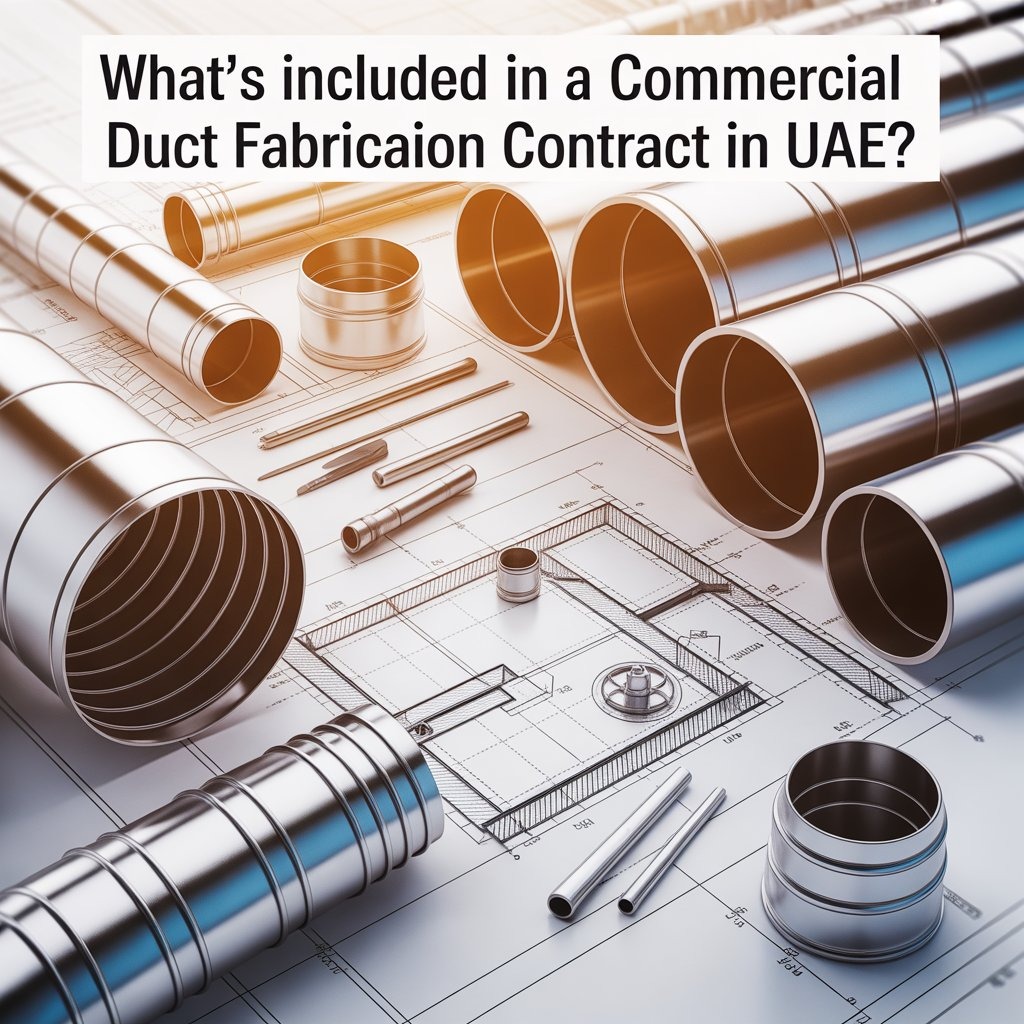
Commercial duct fabrication refers to the design, manufacturing, and installation of sheet metal ductwork systems used to distribute conditioned air throughout a building. These systems form the backbone of any commercial HVAC installation, channelling cool or heated air from central air handling units (AHUs) to occupied spaces.
In the UAE, duct fabrication typically involves galvanised iron (GI) sheet metal, aluminium, or stainless steel, shaped into rectangular, circular, or oval cross-sections and assembled on-site or pre-fabricated in a dedicated workshop.
For commercial projects including offices, hotels, hospitals, malls, warehouses, and industrial facilities precision fabrication is non-negotiable. Poorly made ducts leak conditioned air, drive up energy costs, and create indoor air quality problems.
Why Duct Fabrication Contracts Are Critical in UAE Projects
The UAE’s climate is among the most demanding on earth. Summer temperatures regularly exceed 45°C, and humidity levels near the coast can spike dramatically. This places enormous strain on HVAC systems and makes the quality of duct fabrication a matter of building performance and occupant health.
A clearly structured contract protects all parties involved. For clients and consultants, it establishes accountability and defines deliverables. For contractors like us, it sets clear expectations and prevents scope creep. Without a detailed contract, disputes over materials, timelines, and quality are almost inevitable.
The UAE also has specific regulatory requirements under Dubai Municipality guidelines and international standards such as SMACNA and ASHRAE. A proper contract must reference these standards explicitly to ensure compliance and avoid rejection during inspections.
Complete Scope of Work Breakdown: What We Include at BMT Services LLC
A comprehensive duct fabrication contract in the UAE should cover the following elements in detail. Here is what we address in every contract we execute:
1. Shop Drawings and Engineering Review
Before a single sheet of metal is cut, we prepare detailed shop drawings. These drawings translate the consultant’s design intent into fabrication-ready specifications. They include duct layout plans, section views, connection details, and coordination drawings that avoid clashes with structural, plumbing, and electrical elements.
Our shop drawing process includes:
• AutoCAD or BIM (Revit) coordination drawings
• Duct routing and sizing layouts per floor
• Equipment connection details
• Consultant and client approval process before fabrication begins
2. Material Specifications
Material selection is one of the most critical decisions in any HVAC duct fabrication project in the UAE. The contract must specify the exact grade, thickness, and type of material to be used for each duct section.
We work with three primary materials:
• Galvanised Iron (GI) Sheet Metal: The most widely used material for commercial HVAC ducting in the UAE. We use BS EN 10346 or ASTM A653 Grade GI sheets with zinc coating. Thickness ranges from 0.5mm to 1.6mm depending on duct size and static pressure class.
• Aluminium Ductwork: Specified for areas requiring lightweight or corrosion-resistant installations such as coastal projects or kitchen exhaust systems.
• Stainless Steel Ductwork: Used in pharmaceutical, food processing, hospital operating theatres, and high-humidity environments where hygiene and corrosion resistance are paramount.
3. Duct Sizing and Static Pressure Considerations
Incorrect duct sizing is one of the leading causes of poor HVAC performance in UAE commercial buildings. Oversized ducts waste material and installation cost; undersized ducts create noise, pressure drops, and insufficient airflow.
Our contracts clearly define the duct sizing methodology, whether equal friction method, velocity reduction method, or static regain, and the associated pressure class for each zone. We align all sizing with ASHRAE Handbook of Fundamentals and SMACNA HVAC Duct Construction Standards.
Key parameters specified include:
• Maximum air velocity per duct section (supply, return, exhaust)
• Aspect ratio limitations to minimise turbulence and noise
4. Fabrication Standards Referenced
No credible commercial duct fabrication contract in the UAE should be silent on standards. We explicitly reference the following in all our contracts:
• SMACNA HVAC Duct Construction Standards (Metal and Flexible): The global benchmark for sheet metal duct fabrication, seam types, reinforcements, and joint construction.
• ASHRAE Standards: Particularly ASHRAE 90.1 for energy-efficient duct design and insulation requirements.
• Dubai Municipality Building Code: All duct systems must comply with DM regulations, especially for fire-rated applications in commercial buildings.
• UAE Fire and Life Safety Code of Practice (Civil Defence): Mandatory for fire damper installations, fire-rated duct enclosures, and smoke control systems.
5. Insulation Provisions
In the UAE’s extreme heat, duct insulation is not just a specification requirement it is a performance necessity. Without proper insulation, supply air can gain 2–5°C of heat as it travels through unconditioned spaces like ceiling plenums, which dramatically increases cooling load and energy costs.
Our contracts specify insulation clearly, including:
• Insulation type glass wool, rockwool, or elastomeric foam with aluminium foil facing
• Minimum thickness typically 25mm to 50mm for supply air ducts in non-conditioned spaces
• Vapour barrier requirements to prevent condensation critical in humid coastal areas like Dubai and Abu Dhabi
• Compliance with ASHRAE 90.1 insulation tables
6. Supports and Hangers
Duct support systems are frequently underspecified in UAE projects, leading to sagging ducts, vibration transfer, and noise complaints. Our contracts define the complete hanger and support specification in line with SMACNA guidelines.
Inclusions cover:
• Hanger rod sizing and spacing based on duct dimensions and weight
• Trapeze and clevis hanger details for large horizontal runs
• Anti-vibration isolator specifications for AHU connections
• Seismic restraint considerations for high-rise buildings per ASCE 7
7. Fire-Rated Duct Requirements
Commercial buildings in the UAE must comply with stringent fire and life safety requirements. Fire-rated duct systems are mandatory in areas such as stairwells, escape corridors, plant rooms, and any duct passing through fire-rated compartments.
Our fire-rated duct scope includes:
• Fire-rated duct wrapping (e.g., Rockwool or Promat systems rated to 1, 2, or 4 hours)
• Fire damper installations with motorised actuators as required
• Smoke damper provisions for smoke control zones
• Certification of fire-rated materials and test evidence per UAE Civil Defence requirements
8. Testing and Commissioning
A duct fabrication contract is incomplete without a clear testing and commissioning (T&C) plan. In UAE commercial projects, this is increasingly a requirement of main contractors, consultants, and building authorities.
Our T&C scope typically includes:
• Duct leakage testing per SMACNA standards (Class A, B, or C as specified)
• Air balancing and TAB (Testing, Adjusting, and Balancing) report
• Static pressure verification at AHU connections
• Thermal and acoustic performance checks
• Final commissioning report submitted to client and consultant
9. BOQ Inclusions: What the Bill of Quantities Must Cover
A detailed Bill of Quantities (BOQ) is the commercial backbone of every duct fabrication contract. In UAE projects, BOQ preparation follows a structured format that should be reviewed carefully before acceptance.
A complete ducting BOQ in UAE should itemise:
• GI ductwork supply and install by surface area (m²) per pressure class and gauge
• Fittings elbows, tees, transitions, reducers priced as units or percentage of linear work
• Insulation by m² with material and thickness specified
• Hangers and supports as a lump sum or by weight (kg)
• Fire dampers, smoke dampers, and fire-rated wrapping as separate line items
• Access panels and inspection doors
• Testing, commissioning, and TAB services
10. Quality Standards and Quality Assurance Plans
Quality assurance in duct fabrication is not just about meeting standards on paper ,it is about consistent execution on site. Our contracts include a project-specific Quality Assurance and Quality Control (QAQC) plan that outlines inspection hold points, material testing requirements, and approval processes.
Key quality elements we address:
• Material inspection and approval prior to fabrication
• In-process inspection of seam and joint quality
• Pre-installation inspection checklist
• Third-party or consultant witness testing where required
• Non-conformance reporting and corrective action procedures
11. Warranty Terms
Warranty clauses in UAE construction contracts are governed by the UAE Civil Code, which provides for defect liability periods of up to 10 years for structural elements. For HVAC ductwork, the standard practice in the UAE is a minimum 12-month defect liability period (DLP) from the date of practical completion.
Our contracts specify the warranty scope clearly — including what is covered, response times for defect rectification, and exclusions for misuse or third-party damage. We stand behind our workmanship and materials.
12. Timeline and Project Coordination
In fast-moving UAE commercial construction projects, timeline discipline is critical. Delays in duct installation affect ceilings, fit-out, and handover. Our contracts include a detailed project programme with clear milestones tied to design approvals, material procurement, fabrication, installation, and testing phases.
We also define:
• Coordination meeting schedules with main contractor and MEP coordinator
• Drawing submission and approval timelines
• Phased installation plans where multiple floors are progressed simultaneously
• Site access requirements and material delivery schedules
What Is NOT Included in a Standard Duct Fabrication Contract?
Understanding what falls outside the scope is just as important as knowing what is inside it. Misaligned expectations on exclusions are a common source of disputes in UAE HVAC projects.
Items typically excluded unless specifically contracted:
• Supply and installation of AHUs, FCUs, chillers, or other mechanical plant
• Electrical wiring to VAV boxes, fire dampers, or motorised dampers
• BMS integration and controls programming
• Ceiling works, access door cutting, or architectural modifications
• Civil works such as core drilling or concrete cutting
• Scaffolding beyond what is stated in the contract
• Permits and NOCs from Dubai Municipality or other authorities (unless stated)
• Design changes instructed after shop drawing approval without variation order
Common Mistakes in UAE Duct Fabrication Projects And How to Avoid Them
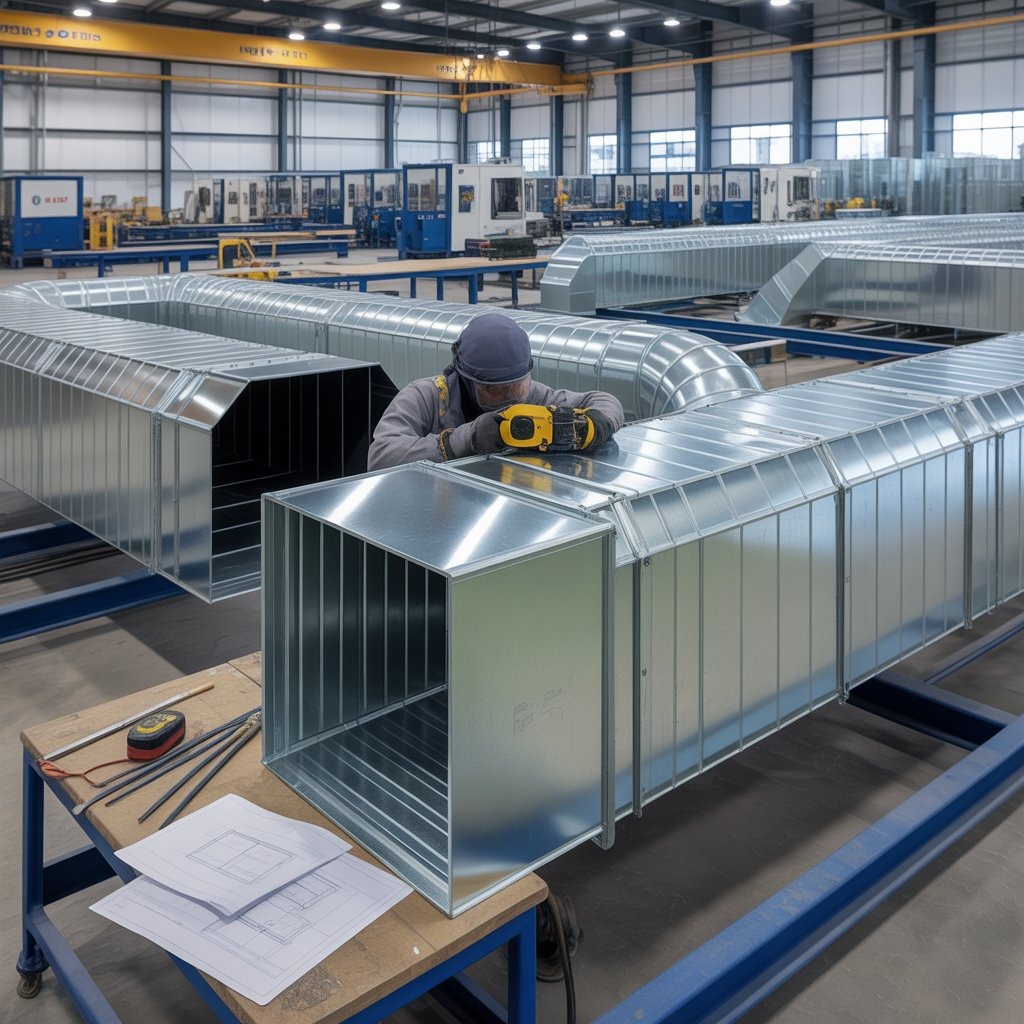
Having worked across hundreds of commercial HVAC projects in the UAE, we have seen the same mistakes appear repeatedly. Understanding these pitfalls helps clients and contractors alike protect their projects.
Mistake 1: Accepting Vague Specifications
Contracts that simply say “GI ductwork as per SMACNA” without specifying gauge, pressure class, or seam type leave enormous room for inferior work. Always insist on complete material and fabrication specifications in writing.
Mistake 2: Skipping Leakage Testing
Duct leakage in UAE commercial buildings can account for 10–30% of total air loss. This dramatically increases energy consumption and prevents the HVAC system from meeting design conditions. Ensure leakage testing is explicitly included in the contract.
Mistake 3: Ignoring Condensation Control
In UAE coastal locations, high ambient humidity means that any gap in duct insulation or vapour barrier can lead to condensation, mould growth, and ceiling damage. Always specify continuous vapour barrier insulation for supply air ducts in unconditioned spaces.
Mistake 4: No Coordination with Structural and Civil Teams
Duct clashes with beams, pipes, and electrical trays are a common cause of rework and delay. Projects without BIM or 3D coordination drawings regularly lose weeks to on-site conflicts that could have been resolved in the design phase.
Mistake 5: Choosing the Lowest Bidder Without Technical Evaluation
The UAE market has many HVAC contractors offering below-market rates by compromising on material thickness, insulation quality, or SMACNA-compliant fabrication methods. A technical bid evaluation that assesses method statements, material submittals, and references is always worth the extra effort.
Mistake 6: Missing Fire Damper Submissions Before Construction
Civil Defence approvals for fire dampers and fire-rated duct systems must be obtained before installation begins. Contractors who proceed without approved submittals risk being ordered to demolish and redo completed work a costly and time-consuming correction.
Red Flags to Watch for Before Signing a Duct Fabrication Contract in UAE
Not every HVAC contractor operating in the UAE maintains the same standards. Before committing to a duct fabrication contract, watch for these warning signs:
• No mention of SMACNA, ASHRAE, or Dubai Municipality compliance in the contract
• Absence of testing and commissioning in the scope or BOQ
• Material specifications limited to generic terms like “standard GI ductwork”
• No clarity on who is responsible for shop drawings and approvals
• Unusually short warranty period (less than 12 months)
• No insurance or performance bond details for large projects
• Contractor unable to provide previous project references or method statements
Why BMT Services LLC Is Your Trusted Partner for Commercial Duct Fabrication in UAE
At BMT Services LLC, we bring a combination of technical expertise, UAE regulatory knowledge, and a commitment to quality that sets us apart. We do not just fabricate ducts.we engineer complete HVAC ducting systems that perform under the UAE’s demanding climate conditions for decades.
What makes us different:
• In-house fabrication workshop with precision CNC equipment
• Fully qualified mechanical engineers and HVAC specialists on every project
• Complete compliance with SMACNA, ASHRAE, and Dubai Municipality standards
• BIM and 3D coordination capability to prevent site clashes
• Proven track record across offices, hotels, hospitals, data centres, and industrial facilities in UAE
• Transparent contracts with detailed BOQ, clear scope, and no hidden exclusions
Ready to Start Your Commercial Duct Fabrication Project?
Whether you are planning a new commercial HVAC installation, a fit-out project, or an existing system upgrade, BMT Services LLC is ready to deliver a transparent, standards-compliant duct fabrication contract tailored to your project’s needs.
Contact us today for a free technical consultation and detailed quotation. Our team will review your project drawings, advise on the optimal ducting strategy, and provide a comprehensive scope of work with no surprises.
BMT Services LLC Your Specialist in Commercial HVAC Duct Fabrication Across the UAE.
Frequently Asked Questions (FAQs)
1. What is the standard gauge of GI sheet used in commercial duct fabrication in UAE?
The gauge depends on duct size and static pressure class. For low-pressure systems, 0.6mm to 0.8mm GI is standard for smaller ducts, while larger ducts above 1500mm use 1.0mm to 1.2mm. SMACNA tables provide the definitive reference, and Dubai Municipality inspections verify compliance.
2. Is duct leakage testing mandatory on commercial projects in UAE?
It is not universally mandated by law, but it is widely required by consultants and main contractors on large commercial projects. We strongly recommend including SMACNA Class A or B leakage testing in all contracts, the energy savings and performance gains far outweigh the testing cost.
3. How long does it take to fabricate and install ductwork for a commercial project in UAE?
Timelines vary significantly by project size. A single-floor office fit-out of 1,000 m² may take 3–4 weeks from drawing approval to completion. Large hotel or hospital projects covering multiple floors may require 3–6 months or more. We build phased programmes to align with the main contractor’s structure and MEP programme.
4. What is the difference between low-pressure and high-pressure ductwork?
Low-pressure ductwork operates at static pressures up to 500 Pa and is used for most standard HVAC distribution systems. Medium-pressure systems run up to 1000 Pa, and high-pressure systems exceed 1000 Pa and are used in large VAV systems or long-run industrial applications. Higher pressure classes require thicker gauge material and more robust joint construction per SMACNA.
5. Do duct fabrication contractors in UAE need Dubai Municipality approval?
Yes. Mechanical contractors operating in Dubai must hold a valid Dubai Municipality trade licence and their designs must be submitted and approved through the NOC and building permit process. For fire-rated ductwork and smoke control systems, Civil Defence approval is also required before installation.
Conclusion
A commercial duct fabrication contract in the UAE is far more than a price agreement. It is a comprehensive technical and commercial document that defines the quality of your building’s HVAC performance for years to come.
From material specifications and SMACNA-compliant fabrication to insulation, testing, and warranty terms, every clause matters. Projects that invest in proper contract documentation from the outset consistently deliver better results,lower energy costs, fewer complaints, smoother inspections, and faster handover.
At BMT Services LLC, we bring the technical depth and UAE-market experience to ensure your duct fabrication project is executed to the highest standards on time, within budget, and fully compliant with all applicable regulations.
Do not leave your HVAC project to chance. Partner with a team that takes every detail as seriously as you do. Reach out to BMT Services LLC today and let us build a duct system your building can rely on.