Imagine walking into your office on a scorching UAE summer morning when temperatures push past 45°C and the AC has completely shut down. Or picture this: a faint burning smell drifts from your building’s rooftop unit, the circuit breaker trips for the third time this week, and your commercial space is warming up fast. These are not random inconveniences. These are urgent warning signs of electrical faults in packaged AC systems, and in a climate as extreme as the UAE, ignoring them can lead to serious consequences for your equipment, your operations, and your people.
Packaged AC systems are the workhorses of commercial cooling across the UAE. From shopping malls and office towers to hotels and industrial warehouses, these self contained units handle enormous cooling loads every single day. But because they operate under intense thermal and electrical stress, they are particularly vulnerable to electrical failures. The challenge is that these faults often develop quietly and progressively before suddenly becoming catastrophic.
This guide from BMT Services LLC, your trusted HVAC and AC maintenance partner in the UAE, breaks down every major sign of electrical faults in packaged AC systems. Whether you manage a single commercial building or an entire property portfolio, understanding these warning signs could save you from expensive breakdowns, emergency shutdowns, and even fire hazards.
What Is a Packaged AC System?
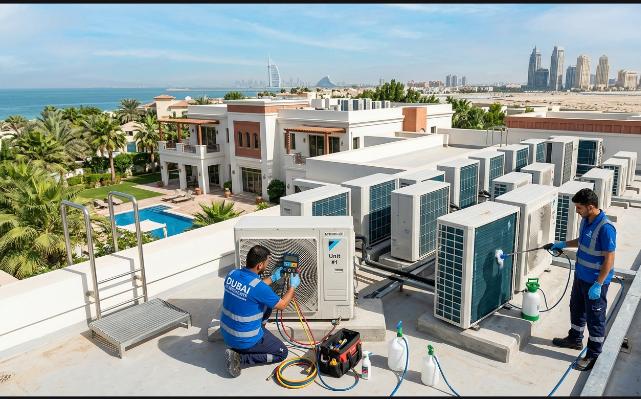
A packaged AC system is a single, self contained unit that houses all the components of a traditional split system, including the compressor, condenser, evaporator coil, air handler, and electrical controls, within one cabinet. These units are typically installed on rooftops or ground level pads and are connected to the building through ductwork.
Unlike split systems where components are distributed between indoor and outdoor units, packaged systems consolidate everything in one location. This makes them ideal for commercial applications where space efficiency and centralized maintenance are priorities. However, this consolidation also means that electrical faults can affect multiple components simultaneously, making early detection even more critical.
Common types of packaged AC systems used across the UAE include packaged rooftop units for commercial buildings, packaged terminal AC units for hotels and apartments, packaged air handling units for large commercial spaces, and gas electric packaged systems for mixed use facilities.
Why Electrical Faults Are Common in UAE Climate
The UAE’s climate creates some of the most demanding operating conditions for HVAC equipment anywhere in the world. Understanding why electrical faults are so prevalent here helps commercial property managers take the right preventive steps.
Extreme Heat and Thermal Stress
When ambient temperatures regularly exceed 45°C, the electrical components inside packaged AC systems work significantly harder. Capacitors degrade faster, motor windings experience increased thermal stress, and wiring insulation deteriorates more rapidly than in temperate climates. This accelerated wear cycle dramatically shortens component lifespans and increases the frequency of electrical failures.
High Humidity and Salt Air in Coastal Areas
Cities like Abu Dhabi, Dubai, and Sharjah are coastal environments where humidity levels frequently spike. Moisture and salt particles infiltrate AC units, corroding electrical terminals, contactors, and control boards. In rooftop installations, this exposure is even more severe because units face direct environmental elements around the clock.
Voltage Fluctuations and Power Quality Issues
Commercial buildings across the UAE, particularly in older districts, can experience voltage fluctuations that stress AC electrical components. Sustained undervoltage forces motors to draw excessive current, accelerating insulation breakdown. Overvoltage conditions can damage capacitors and control boards. These power quality issues are a leading contributor to premature electrical component failure.
Continuous Operation Demands
Unlike in cooler climates where AC systems cycle off regularly, UAE commercial properties often run their packaged systems 18 to 24 hours per day for months at a stretch. This continuous operation reduces natural cooling periods for electrical components, shortening service life and increasing fault risk substantially.
Top Signs of Electrical Problems in Packaged AC Systems

Recognizing the warning signs of electrical faults early is the most effective way to prevent minor issues from escalating into complete system failures. Below are the most critical indicators that your packaged AC system may be experiencing electrical problems.
1. Burning Smell or Smoke from the Unit
A burning smell emanating from a packaged AC unit is one of the most alarming signs of an electrical fault and should never be dismissed. This odor typically indicates that electrical insulation is overheating, a motor winding is burning out, a relay or control board component is failing, or wiring is arcing against metal surfaces.
⚠ SAFETY WARNING: If you detect smoke or a burning smell from any AC unit, shut it down immediately and do not restart it. This is a potential fire hazard.
Real world example: At a commercial office complex in Business Bay, Dubai, maintenance staff noticed a persistent acrid smell from a rooftop packaged unit. Upon inspection by BMT Services LLC technicians, a failed contactor was found arcing against adjacent wiring. Left unaddressed, this fault could have caused a fire in the roof space. Early identification prevented a potentially catastrophic incident.
2. Frequent Circuit Breaker Tripping
Circuit breakers are designed to protect electrical systems from overcurrent conditions. If your packaged AC system repeatedly trips its circuit breaker, this is a definitive signal that something is wrong electrically. Possible causes include a short circuit in wiring or motor windings, a failed capacitor drawing excessive current, a grounded compressor pulling abnormally high amperage, and undersized or aged wiring unable to handle operational loads.
A single breaker trip could be a minor anomaly. Repeated tripping is a serious fault that requires immediate professional diagnosis. Never simply reset the breaker without investigating the cause.
Real world example: A retail mall in Sharjah reported their packaged rooftop units tripping breakers almost daily during peak summer operation. Investigation revealed multiple compressors with grounded windings drawing excessive current. Replacing the affected compressors and upgrading associated wiring resolved the issue and restored stable system operation.
3. AC Not Turning On
When a packaged AC system refuses to start or shows no response to thermostat commands, electrical faults are among the most common culprits. Potential causes include a failed contactor preventing power from reaching the compressor, blown fuses in the control circuit, a faulty control board unable to send start signals, transformer failure cutting off low voltage control power, and open motor windings causing the unit to fail its startup sequence.
It is important to distinguish between a unit that simply does not respond at all and one that attempts to start but shuts off quickly. Both scenarios point to electrical problems but of different types and severity levels.
4. Inconsistent or Poor Cooling Performance
If your packaged AC system runs but fails to cool effectively or produces inconsistent temperatures across different zones, electrical faults may be the reason. A failing capacitor reduces compressor and fan motor efficiency, causing reduced cooling capacity. Control board malfunctions can prevent compressors from staging correctly in multi stage systems. Wiring degradation increases resistance and reduces power delivery to key components. Additionally, sensor failures caused by electrical faults lead to incorrect system responses to actual cooling demands.
Real world example: A five star hotel in Abu Dhabi experienced guest complaints about uneven cooling in specific room clusters. Technicians from BMT Services LLC identified a failing capacitor bank on two compressors in the building’s packaged units. The affected compressors were running at reduced efficiency, unable to meet cooling demands during peak occupancy periods.
5. Strange Noises from the Control Panel or Electrical Cabinet
Unusual sounds originating from the electrical section of a packaged AC system are important diagnostic clues. A buzzing or humming sound often indicates a failing relay, contactor, or transformer. Clicking sounds can suggest a contactor cycling abnormally or a loose electrical connection. Crackling or popping noises are particularly concerning as they may indicate arcing within the electrical cabinet, which is a fire risk requiring immediate attention.
⚠ SAFETY WARNING: Crackling or sparking sounds from any electrical panel should be treated as an emergency. Evacuate the immediate area and call a qualified technician immediately.
6. Unusually High Electricity Bills
A sudden and unexplained increase in your building’s electricity consumption is often one of the earliest detectable signs of an electrical fault in a packaged AC system. When electrical components degrade, systems become less efficient and consume more power to achieve the same cooling output. A failing compressor with degraded motor windings draws significantly more current. Capacitor faults cause motors to operate at poor power factors, increasing energy consumption. Control board malfunctions can cause systems to run continuously even when cooling targets are met, wasting substantial energy.
Commercial property managers who track monthly utility bills carefully are often the first to detect efficiency degradation caused by electrical faults. A 15 to 25 percent increase in AC related electricity costs without a corresponding change in occupancy or operational hours warrants immediate HVAC inspection.
7. Thermostat Malfunction
While thermostat issues can have multiple causes, electrical faults within the packaged AC system can directly affect thermostat performance. Low voltage supply caused by transformer problems can make thermostats behave erratically. Control wiring damage between the unit and thermostat can cause intermittent communication failures. A faulty control board may send incorrect signals to the thermostat, causing it to display inaccurate temperatures or fail to respond to programmed settings. When thermostats display error codes or fail to communicate with the AC unit, always consider the possibility of an underlying electrical fault in the system itself rather than immediately replacing the thermostat.
8. Wiring Damage and Short Circuits
Physical wiring damage is both a cause and a consequence of electrical faults in packaged AC systems. In UAE rooftop installations, wiring insulation is subjected to extreme UV radiation, high temperatures, and occasional pest intrusion. Degraded insulation leads to short circuits that can damage multiple components simultaneously. Warning signs of wiring damage include visible discoloration or melting of wire insulation, scorch marks inside the electrical cabinet, GFCI or arc fault protection devices triggering repeatedly, and the smell of hot or melting plastic from the unit.

⚠ SAFETY WARNING: Never attempt to inspect, touch, or repair wiring inside a packaged AC unit while it is energized. Always ensure power is fully isolated at the disconnect switch before any electrical inspection.
What Causes Electrical Failures in Packaged AC Systems?
Understanding the root causes of electrical failures helps property managers and maintenance teams make more informed decisions about preventive maintenance and equipment lifecycle management.
Capacitor degradation is one of the most common causes of electrical problems in UAE packaged systems. Capacitors are responsible for starting and running motors. They degrade naturally over time, and UAE’s extreme heat accelerates this process significantly. A failed run capacitor causes motors to draw excessive current, which can trigger breaker trips and cause motor windings to overheat.
Contactor wear is another leading cause. Contactors are electromagnetic switches that control power delivery to compressors and fan motors. Each time a contactor opens and closes, its contact surfaces experience minor arcing. Over thousands of cycles, these surfaces pit and degrade, eventually causing poor connections, overheating, or complete failure.
Control board failures result from sustained heat exposure, voltage spikes, and moisture infiltration. As control boards degrade, they may send incorrect signals, fail to sequence compressors properly, or stop responding to thermostat inputs entirely.
Compressor electrical failures include grounded windings where internal insulation breaks down allowing current to flow to the compressor shell, open windings where wire breaks internally, and shorted windings where adjacent motor coils make unintended electrical contact. Each of these fault types produces distinct symptoms and requires different repair approaches.
Power quality issues, including voltage imbalance in three phase systems, voltage sags during peak demand periods, and harmonic distortion from variable frequency drives or other equipment, accelerate electrical degradation across all components simultaneously.
Can You Fix Electrical AC Faults Yourself?
This is a question many building managers and maintenance teams ask, and the honest answer is: rarely, and almost never safely without proper training and equipment.
Modern packaged AC systems operate at voltages between 220 volts and 480 volts for larger three phase commercial systems. These voltage levels are capable of causing fatal electrocution. Beyond voltage dangers, capacitors store lethal electrical charges even after power is disconnected and must be properly discharged before any work begins.
Additionally, diagnosing electrical faults accurately requires specialized test equipment including true RMS digital multimeters, clamp on ammeters, megohm meters for insulation testing, and capacitor analyzers. Without these tools and the knowledge to interpret their readings, attempting electrical repairs can result in misdiagnosis, improper repairs that fail quickly or create new hazards, voiding of equipment warranties, and potential violations of UAE building and electrical codes.
The appropriate role for property management teams and in house maintenance staff is to monitor systems for warning signs, document symptoms accurately, shut down units safely when hazardous conditions are detected, and call qualified HVAC technicians promptly. Leave all electrical diagnosis and repair work to certified professionals.
When to Call Professionals Immediately
Certain situations require immediate professional intervention and should not wait for a scheduled maintenance visit.
You should call a professional HVAC technician right away if you detect any burning smell or see smoke from the unit, if you hear crackling, popping, or sparking sounds from the electrical cabinet, if the circuit breaker trips repeatedly within a short time period, if the unit fails to respond to any controls after a recent breaker trip, if any visible arcing or scorch marks are observed inside the unit, or if staff report feeling electrical tingling when near the unit or its ductwork.
BMT Services LLC provides emergency HVAC repair services across the UAE with rapid response times. Our certified technicians are available to respond to urgent electrical fault situations with the diagnostic equipment and replacement components needed to restore your system safely.
Preventive Maintenance Tips to Avoid Electrical Faults
Prevention is always more economical than emergency repair when it comes to electrical faults in commercial packaged AC systems. The following practices, when implemented consistently, significantly reduce the risk of unexpected electrical failures.
Electrical Maintenance Checklist for Packaged AC Systems
• Inspect all electrical connections for corrosion, looseness, or heat damage
• Test capacitors and contactors for proper function
• Check compressor amperage draw against nameplate ratings
• Inspect control board for burnt marks or failed relays
• Test thermostat calibration and signal accuracy
• Examine wiring insulation for cracks or UV degradation
• Verify circuit breaker ratings match equipment requirements
• Clean condenser coils and check fan motor electrical load
• Test voltage supply and check for phase imbalance (three phase systems)
• Document all findings and schedule follow up within 90 days
In addition to this technical checklist, commercial property managers should maintain a log of all maintenance visits, component replacements, and observed anomalies. This historical record helps technicians identify developing trends before they become failures and supports warranty claims when needed.
Recommended Maintenance Frequency in UAE Climate
Given the demanding UAE operating environment, the industry recommended maintenance frequency for commercial packaged AC systems is a comprehensive electrical inspection every three months, a full service including coil cleaning and refrigerant check every six months, an annual detailed inspection covering complete electrical component testing and wiring integrity assessment, and an immediate unscheduled inspection whenever any of the warning signs described in this guide are observed.
How BMT Services LLC Diagnoses and Fixes Electrical AC Issues
At BMT Services LLC, we approach electrical fault diagnosis in packaged AC systems with a structured, systematic methodology developed through years of experience servicing commercial HVAC systems across the UAE.
Step 1: System History Review
Our technicians begin every diagnostic visit by reviewing the system’s maintenance history, recent fault patterns, and any changes in operational behavior reported by building staff. This historical context often narrows the diagnostic focus significantly.
Step 2: Visual and Physical Inspection
A thorough visual inspection covers all wiring for discoloration, damage, or improper connections, the control panel for scorch marks or component damage, contactors and relays for pitting or excessive wear, and capacitors for physical swelling or leakage, which are signs of internal failure.
Step 3: Electrical Testing
Using professional diagnostic equipment, our technicians measure voltage at multiple points in the circuit to identify supply issues, compressor and motor amperage to detect overcurrent conditions, capacitor microfarad values against nameplate specifications, insulation resistance of motor windings using megohm testing, and contactor coil resistance and contact condition.
Step 4: Control System Verification
Control board function, thermostat signal integrity, and sensor accuracy are verified to ensure the control system is correctly interpreting inputs and delivering appropriate commands to all mechanical components.
Step 5: Repair and Verification
Identified faults are repaired using quality replacement components appropriate for UAE climate conditions. Following all repairs, the system is tested through multiple operating cycles to verify stable electrical performance before the technician signs off and documents the completed work.
Why Professional HVAC Inspection Saves Money
The financial case for regular professional HVAC inspection is compelling for any commercial property operator in the UAE.
Unplanned equipment failure in a commercial setting generates costs far beyond just the repair itself. Consider the cost of emergency repair call outs, which are typically significantly higher than scheduled maintenance visits. Add to this the cost of business disruption when a commercial space becomes too hot for occupancy or operation, potential damage to temperature sensitive inventory or equipment during an unplanned outage, and the accelerated replacement timeline when minor faults are allowed to cascade into major component failures.
An Annual Maintenance Contract with BMT Services LLC transforms unpredictable emergency costs into controlled, budgeted maintenance expenses. Our AMC clients consistently achieve longer equipment life, fewer emergency breakdowns, lower annual energy consumption, and better protection for their property investment.
Partner with BMT Services LLC for Complete AC Electrical Protection
EMERGENCY AC REPAIR | ANNUAL MAINTENANCE CONTRACTS | FREE INSPECTION | CERTIFIED TECHNICIANS
BMT Services LLC is the UAE’s trusted partner for commercial HVAC maintenance and repair. Our team of certified technicians brings deep expertise in diagnosing and resolving electrical faults in all types of packaged AC systems, from small commercial units to large scale rooftop installations serving malls, hotels, and office complexes.
Why Commercial Property Owners Choose BMT Services LLC
• Emergency repair services with fast response times across the UAE
• Certified HVAC technicians with specialized training in commercial packaged systems
• Annual Maintenance Contracts tailored to your property’s specific requirements
• Comprehensive diagnostic equipment for accurate electrical fault identification
• Documented service reports for every visit supporting your maintenance records
• Quality replacement components sourced for UAE climate performance
• Free initial inspection for new clients to assess system condition
Contact BMT Services LLC today for your FREE system inspection and find out how an Annual Maintenance Contract can protect your commercial property from unexpected AC failures.
Frequently Asked Questions
Q1: How do I know if my packaged AC has an electrical fault versus a refrigerant problem?
Electrical faults and refrigerant problems can produce some similar symptoms such as poor cooling, but there are key differences. Electrical faults often present with specific indicators like circuit breaker trips, burning smells, unusual sounds from the electrical cabinet, or the unit failing to start entirely. Refrigerant issues typically manifest as gradual cooling loss, ice formation on the evaporator coil, or hissing sounds near refrigerant lines. A certified technician can quickly distinguish between these fault types using appropriate diagnostic tools.
Q2: How often should packaged AC systems in UAE commercial buildings be inspected for electrical issues?
Given the extreme operating conditions of the UAE climate, commercial packaged AC systems should receive a comprehensive electrical inspection at least every three months. Systems operating in particularly harsh environments, such as coastal locations with high salt air exposure or industrial facilities with elevated dust levels, may benefit from more frequent inspections. BMT Services LLC recommends an Annual Maintenance Contract that includes structured quarterly visits to ensure continuous protection.
Q3: Can electrical faults in packaged AC systems cause fires?
Yes, electrical faults in packaged AC systems are a recognized fire hazard. Arcing from damaged wiring, overheating from failed components, and short circuits can all ignite surrounding materials. Rooftop installations with flammable insulation materials or adjacent to roof membrane materials are at particular risk. This is why burning smells, smoke, or crackling sounds from any AC unit must be treated as an emergency requiring immediate shutdown and professional inspection.
Q4: What is included in a BMT Services LLC Annual Maintenance Contract for packaged AC systems?
BMT Services LLC AMC packages include scheduled preventive maintenance visits throughout the year covering electrical component testing, cleaning, and adjustment, priority response for emergency repair calls, detailed service reports after every visit, and proactive component replacement recommendations to prevent failures. Contract terms are customized to the specific needs of each commercial property. Contact our team directly for a consultation and proposal tailored to your facility.
Q5: Is it safe to continue operating a packaged AC system that has tripped its circuit breaker once?
A single breaker trip is not necessarily a reason to permanently shut down a system, but it should never be ignored. If the system operates normally after a single reset and the breaker does not trip again, a temporary overload may have been the cause. However, if the breaker trips again within a short period, or if there are any other warning signs present such as unusual sounds or smells, the system should be shut down and a professional inspection arranged immediately. Repeated breaker trips indicate a persistent fault that will not resolve itself.